




September 18, 2025

September 10, 2025
July 3, 2025
January 10, 2025
WPI Inflation Climbs in May, But Lower Crude Oil Prices May Ease RBI Pressure

Author
Shoonya Team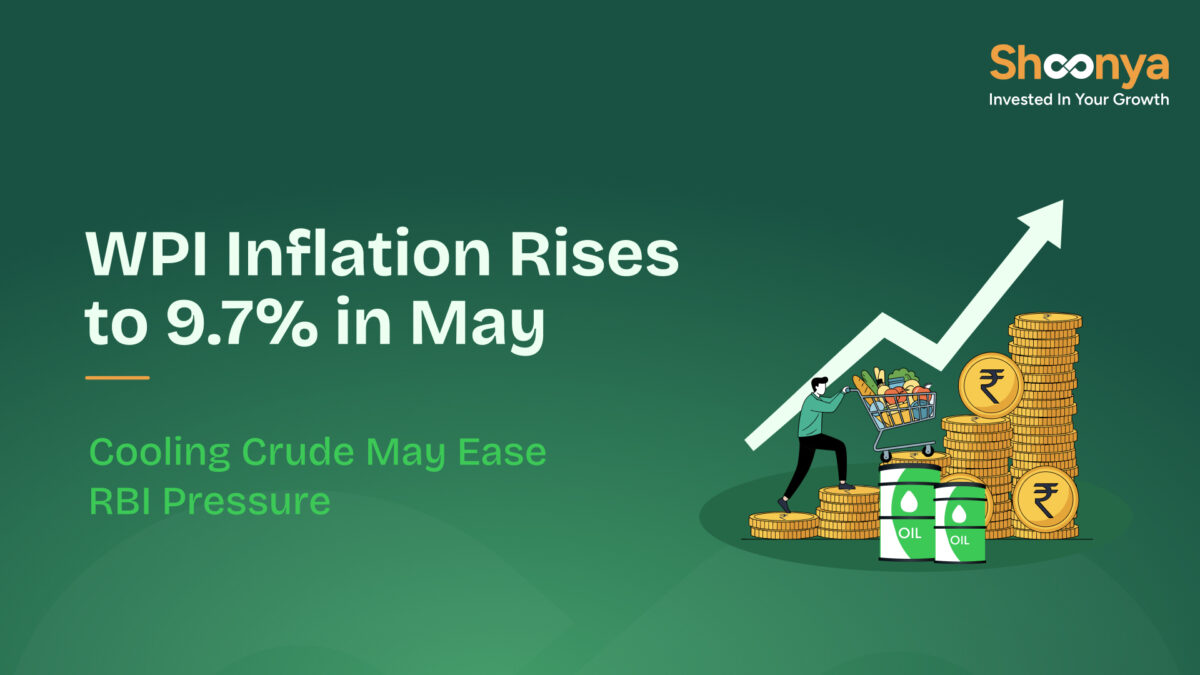
Wholesale price index inflation rose to 9.7% year-on-year in May, up from 8.3% in April, showing continued input cost pressure across the economy.
The increase was mainly driven by higher fuel and manufacturing prices. However, lower crude oil prices, a stable rupee, and weaker dollar pressure may give the Reserve Bank of India room to keep interest rates on pause for now.
Why Did Wholesale Price Index Inflation Rise in May?
Wholesale inflation increased because businesses faced higher input costs, especially in fuel and manufacturing.
The WPI data showed a sharp rise across key price categories:
Fuel inflation was led by higher prices of petrol, natural gas, and mineral oils. Manufacturing prices also strengthened, indicating that cost pressure was not limited to one segment.
How Do Fuel Prices Affect Wholesale Inflation?
Fuel prices directly affect the wholesale price index by influencing production, transport, and distribution costs.
When petrol, natural gas, and mineral oil prices rise, companies may face higher supply-chain costs. These costs can eventually influence broader price trends in the economy.
This is why fuel prices and inflation are closely linked, especially in a country that depends heavily on imported energy.
Why Can Lower Crude Oil Prices Offer Relief?
Lower crude oil prices can help reduce imported inflation pressure.
If global oil prices soften, oil marketing companies may face less pressure to raise fuel prices. A stable rupee and a weaker US dollar can also make imports less expensive in rupee terms.
Together, these factors may help reduce future price risks even after the recent rise in wholesale inflation.
What Does This Mean for RBI Monetary Policy?
The RBI may get more room to keep interest rates unchanged if crude oil prices stay lower and the rupee remains stable.
According to the report, softer global commodity prices and currency stability may allow the central bank to delay any immediate rate hike. This means the next RBI interest rate decision may depend more on whether inflation risks ease or return in the coming months.
For now, the probability of an August rate hike appears lower.
What Inflation Risks Should RBI Still Watch?
Even with some relief from crude oil, inflation risks have not disappeared. The RBI may continue to watch:
- Food price movement
- El Nino-related weather risks
- Household inflation expectations
- Global commodity prices
- Rupee movement against the US dollar
- Fuel price decisions by oil marketing companies
These factors can influence both wholesale price inflation and consumer inflation in India.
How Is the Producer Price Index Linked to WPI?
India is also moving towards a new Producer Price Index framework.
The Department for Promotion of Industry and Internal Trade has introduced the PPI framework, under which the Output PPI is expected to replace the Wholesale Price Index over the next five years.
This change is important because PPI is generally used to track price changes at the producer level and may offer a more updated way to measure business-level inflation.
Final Outlook
Wholesale price index inflation rose sharply in May, led by fuel and manufacturing prices.
However, lower crude oil prices, rupee stability, and weaker dollar pressure may reduce future inflation stress. Going ahead, the RBI is likely to watch crude prices, food inflation, weather risks, and household inflation expectations before taking its next monetary policy decision.


Explore Our Offerings

Stocks
Trade equities across NSE and BSE with zero delivery charges. Invest, hold or sell with a seamless experience.


Future & Options
Execute complex strategies with simple tools and real-time data.

IPOs
Apply to the latest IPOs in just a few taps. Stay updated and capture opportunities as they open.