




August 26, 2026

September 18, 2025
September 10, 2025
July 3, 2025
Fitch Projects India’s GDP Growth at 6.4% in FY27 Despite Energy Challenges

Author
Shoonya Team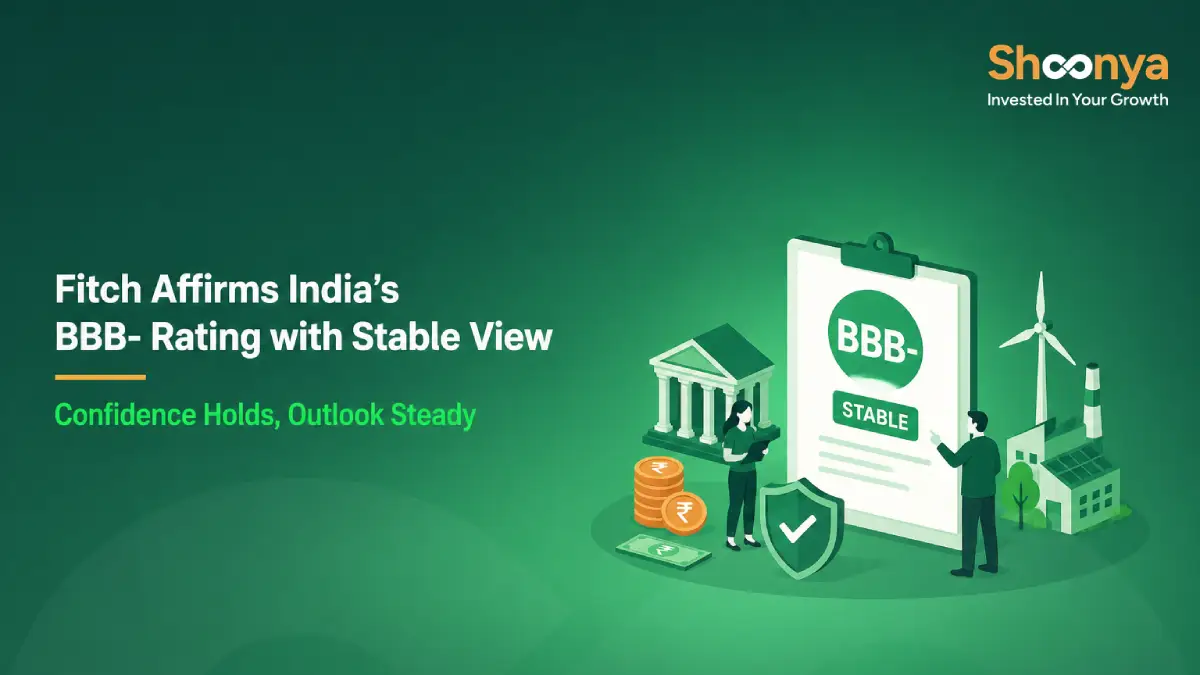
Fitch affirmed India’s sovereign credit rating at BBB- with a stable outlook, keeping the country at the same tier it has held since 2006. The agency said India’s macroeconomic stability and improving policy credibility are helping offset disruptions linked to the West Asia conflict, even as higher fuel costs and capital outflows add pressure.
Key Figures From the Fitch India Rating Review
| Indicator | Fitch Estimate or Projection |
|---|---|
| India Sovereign Rating | BBB- with stable outlook |
| Real GDP Growth in FY27 | 6.4% |
| Forex Reserves by End-FY27 | $733 billion |
| General Government Debt in FY26 | 84.4% of GDP |
| BBB Category Debt Median | 57% of GDP |
| Expected Debt Level by FY31 | Around 79% of GDP |
Why Fitch Retained India’s BBB- Rating
The decision balanced two contrasting elements: strong expansion on one side and weak fiscal indicators on the other.
Key positives cited by the agency:
- Robust domestic output that remains well above the median for BBB-rated sovereigns
- Macroeconomic resilience through successive external shocks
- Improving policy credibility that has supported investor confidence
The agency did not see a lasting threat to India’s output trajectory from the current fuel price shock.
India Growth Outlook: Strong but Below Recent Peaks
The January-March quarter expanded 7.8%, showing domestic momentum had held up heading into FY27. The 6.4% projection for the full year represents a moderation from the strong average of the previous three years, but remains well ahead of peers in the same rating category.
How the Energy Shock Is Affecting Inflation and the Rupee
US-Iran tensions and the ongoing Middle East conflict have disrupted global fuel supplies, pushed the rupee to record lows, and triggered foreign capital outflows. Government interventions have helped limit the direct pass-through of higher costs to consumers, but second-round effects remain a watch point.
Key pressure points flagged:
- Retail CPI rose to 4.38% in June, above the RBI’s 4% medium-term target
- El Niño conditions could add further upward pressure on food prices alongside fuel costs
- The rupee’s weakness against the dollar has added to import costs across the economy
A 25 bps RBI Rate Hike Expected Later This Year
The agency anticipates a 25-basis-point increase in the Reserve Bank of India’s repo rate before the end of FY27. The expectation rests on the risk that elevated oil prices could feed into broader consumer prices, requiring a monetary policy response to keep expectations anchored.
Why Public Debt Remains the Primary Rating Constraint
General government debt stood at 84.4% of GDP in FY26, far above the 57% median for BBB-rated sovereigns. This gap is the single largest factor holding back India’s credit profile.
Assuming nominal GDP expansion of 10.5% over the medium term, the debt ratio is expected to ease gradually to around 79% by FY31. The pace of that reduction will depend on:
- Fiscal consolidation staying on track through FY27 and beyond
- Revenue collections holding up against subsidy and expenditure pressures
- Nominal growth remaining broadly in the 10-11% range through the medium term
Political and Employment Factors Also in the Frame
Two social and political factors also featured in the assessment:
- Further state election gains for the Bharatiya Janata Party were cited as supportive of policy implementation continuity
- Youth unemployment was flagged as a potential source of populist spending pressure, with recent protests over leaked medical entrance exams cited as a sign of rising anxiety around job opportunities
Final Outlook
India’s sovereign credit profile continues to reflect the same split it has shown for years: output is the clear strength, public debt is the constraint. The variables that will shape the next rating review are the trajectory of consumer prices, the RBI’s rate decision later in the year, the rupee’s stability, and whether the debt ratio begins the gradual decline toward the FY31 projection.
Source: NDTV Profit


Explore Our Offerings

Stocks
Trade equities across NSE and BSE with zero delivery charges. Invest, hold or sell with a seamless experience.


Future & Options
Execute complex strategies with simple tools and real-time data.

IPOs
Apply to the latest IPOs in just a few taps. Stay updated and capture opportunities as they open.