




September 18, 2025

September 10, 2025
July 3, 2025
January 10, 2025
India’s PMI Rises to 58.3 in April 2026 as Business Activity Recovers

Author
Shoonya Team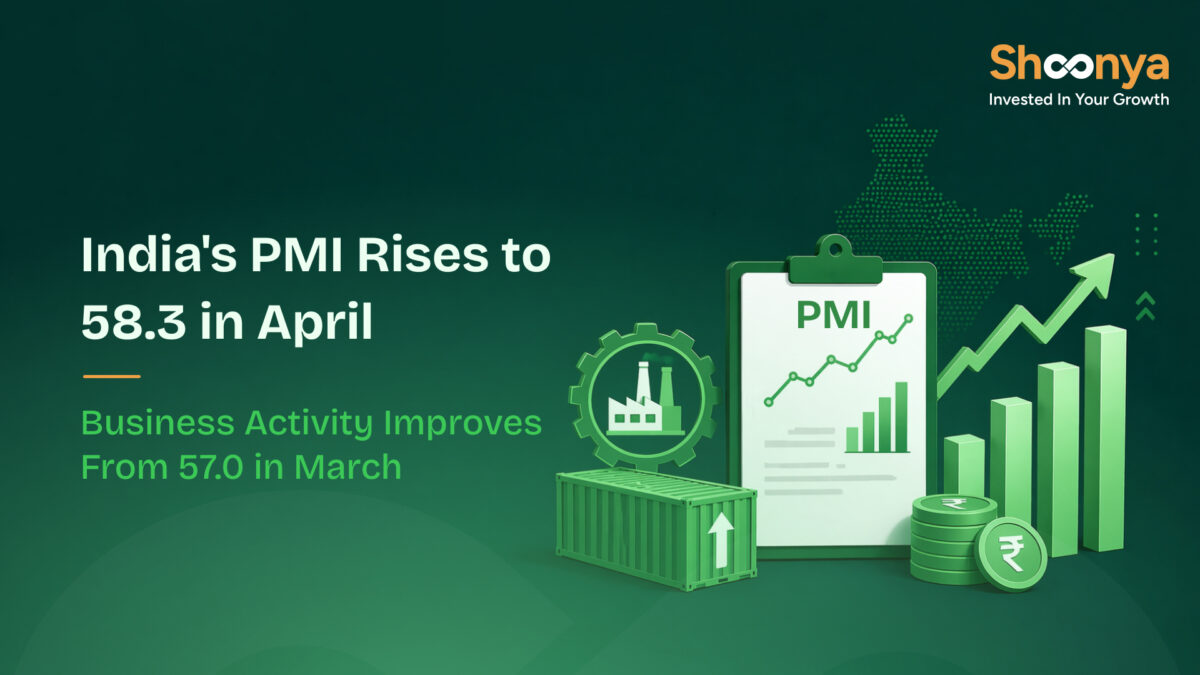
India’s PMI data showed a stronger start to the new fiscal year, with private sector activity recovering after March’s slowdown. The HSBC Flash Composite PMI rose to 58.3 in April 2026 from 57.0 in March, signalling faster expansion across manufacturing and services.
What Does the Latest India PMI Data Show?
The latest India PMI index reading points to an improvement across the private sector. Manufacturing recorded a sharper rebound, while services continued to expand at a steady pace.
| PMI Indicator | April 2026 | March 2026 |
| Composite PMI | 58.3 | 57.0 |
| Manufacturing PMI | 55.9 | 53.9 |
| Services PMI | 57.9 | 57.5 |
The April reading suggests that India entered the new financial year on a firmer note, mainly supported by factory output and new orders.
Why Did India’s Business Activity Improve in April?
Business activity improved as companies reported stronger output and fresh orders. Manufacturing led the recovery as factories increased production and built buffer stocks to manage possible supply-side disruptions.
Services also gained pace, supported by steady urban demand. This helped the overall PMI reading rise compared to March.
How Did Manufacturing PMI Perform?
The manufacturing PMI rose to 55.9 in April from 53.9 in March. This was an important recovery because the March reading had marked a four-year low for the sector.
The survey showed better factory output and new order growth. Companies also increased inventory levels to prepare for uncertainty around supply chains and external disruptions.
What Happened in the Services Sector?
The services sector remained in expansion mode. The Services PMI increased to 57.9 in April from 57.5 in March.
The rise was smaller than the manufacturing rebound, but services continued to support overall private sector growth. Strong urban demand remained a key factor behind the sector’s steady performance.
What Does a PMI Reading Above 50 Mean?
A PMI reading above 50 means business activity is expanding. A reading below 50 means activity is shrinking.
Since India’s Composite PMI stood at 58.3 in April, it shows that private sector activity remained comfortably in expansion territory. For traders and investors, PMI data is useful because it gives an early signal of economic activity before many official growth numbers are released.
Conclusion
The April PMI data suggest that growth momentum is intact at the beginning of the new fiscal year. Manufacturing recovered from March’s weak reading, while services continued to expand steadily.
However, higher input costs and external risks remain important factors to monitor. If supply pressures ease and demand stays firm, the April rebound could support a stronger first quarter for India’s economy.
Source: https://www.moneycontrol.com/
Disclaimer: This content is for education and awareness purposes only and should not be considered investment advice or a recommendation. Investments in securities markets are subject to market risks. Read all the related documents carefully before investing.


Explore Our Offerings

Stocks
Trade equities across NSE and BSE with zero delivery charges. Invest, hold or sell with a seamless experience.


Future & Options
Execute complex strategies with simple tools and real-time data.

IPOs
Apply to the latest IPOs in just a few taps. Stay updated and capture opportunities as they open.