




September 18, 2025

September 10, 2025
July 3, 2025
January 10, 2025
Food Prices Push India’s Retail Inflation to 4-Month High at 3.48%

Author
Shoonya Team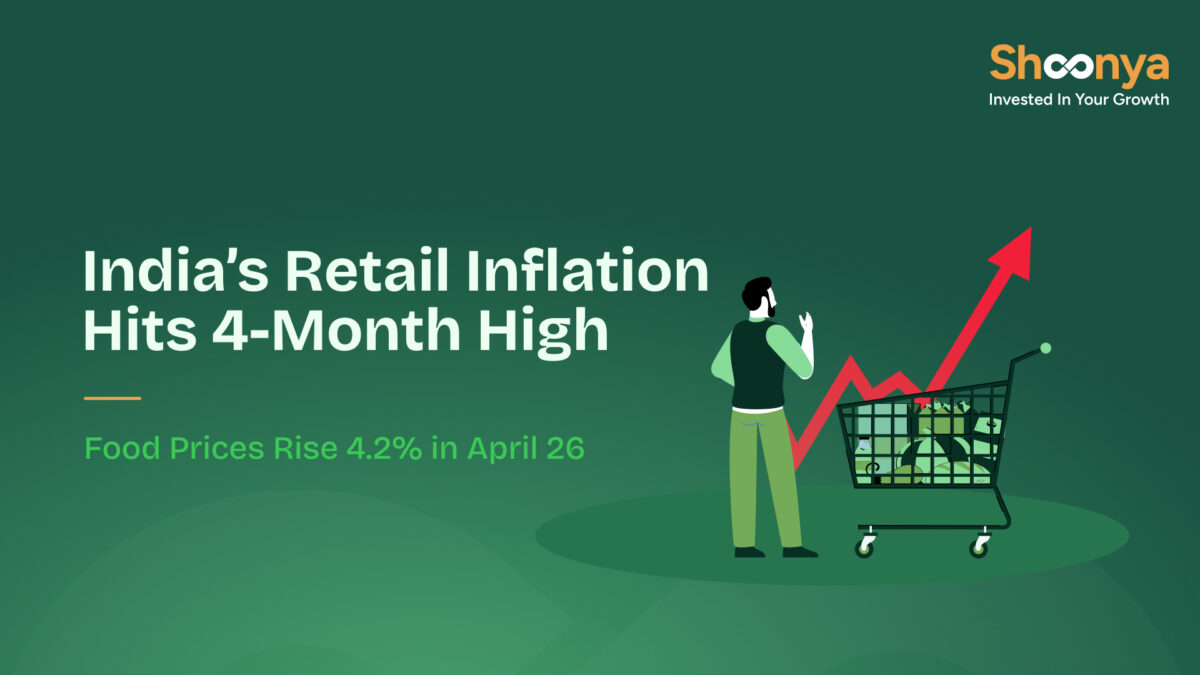
India’s retail inflation, measured by the Consumer Price Index (CPI), rose to 3.48% in April from 3.40% in March, marking a four-month high.
The number is still below the RBI’s medium-term target of 4%, but the uptick shows that cost pressure is returning in some categories, especially food, personal care, and services.
Why Did India’s Retail Inflation Rise in April?
Retail inflation increased mainly because food costs rose during the month.
Food inflation climbed to 4.2% in April from 3.87% in March, also touching a four-month high. Rural food inflation stood at 4.26%, while urban food inflation was 4.1%.
This shows that food-related price increases were visible across both rural and urban markets.
Which CPI Categories Became Costlier?
Price pressure was evident across food, personal care, and service categories.
| Category | April Inflation |
| Retail inflation / CPI | 3.48% |
| Food inflation | 4.2% |
| Food and beverages | 4.01% |
| Restaurants and accommodation | 4.2% |
| Personal care and miscellaneous services | 17.66% |
The sharp rise in personal care and miscellaneous items was partly linked to higher prices of precious metals and jewellery.
Which Items Saw the Sharpest Price Rise?
Some individual items saw a strong year-on-year price rise in April.
| Item | Price Change |
| Silver jewellery | Up 144.3% |
| Coconut / Copra | Up 44.6% |
| Gold, diamond and platinum jewellery | Up 40.7% |
| Tomato | Up 35.3% |
These price increases contributed to the overall CPI inflation
Which Food Items Became Cheaper?
Yes, some vegetable prices continued to give relief.
Potato prices fell 23.7% year-on-year, while onions became 17.7% cheaper. This helped offset part of the increase seen in other food items.
What Does This Mean for RBI Inflation Outlook?
The April data show that inflation is still within the RBI’s comfort range, but risks are rising.
Economists are watching three major factors:
- Food price movement
- Crude oil prices
- Weather-related risks
If food and fuel prices rise further, inflation may move closer to the RBI’s 4% target in the coming months. This could influence the central bank’s view of interest rates in upcoming policy meetings.
Final Outlook: How Can Higher Inflation Affect the Indian Economy?
Retail inflation matters because it directly affects household budgets.
For the Indian economy, higher prices can influence:
- Consumer spending
- Food and fuel costs
- Interest rate expectations
- Market sentiment
- Corporate input costs
A moderate rise may not be alarming, but sustained cost pressure can make consumers cautious and keep policymakers alert.
Source: https://www.moneycontrol.com/
Disclaimer: This content is for education and awareness purposes only and should not be considered investment advice or a recommendation. Investments in securities markets are subject to market risks. Read all the related documents carefully before investing.


Explore Our Offerings

Stocks
Trade equities across NSE and BSE with zero delivery charges. Invest, hold or sell with a seamless experience.


Future & Options
Execute complex strategies with simple tools and real-time data.

IPOs
Apply to the latest IPOs in just a few taps. Stay updated and capture opportunities as they open.