




September 18, 2025

September 10, 2025
July 3, 2025
January 10, 2025
Indian Bonds Under Pressure as 10-Year Yield Rises to 6.93%

Author
Shoonya Team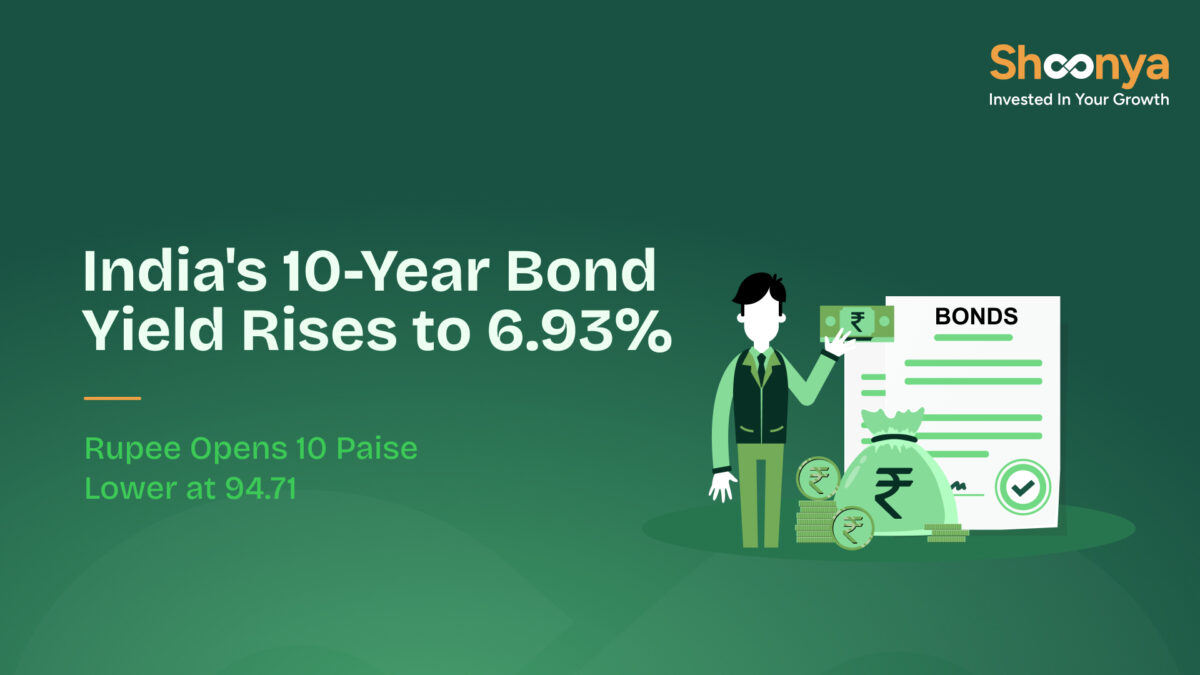
Indian bonds came under pressure in early trade, with the 10-year bond yield rising amid rupee weakness and a rebound in Brent crude.
India’s 10-year benchmark yield was trading at 6.93% on May 7, compared with 6.92% at the previous close. The move reflected cautious sentiment as crude prices recovered above the $100-per-barrel level.
Why Are Indian Bonds Under Pressure?
Indian bonds weakened mainly due to two factors:
- Weaker rupee
- Higher Brent crude prices
A weaker currency can add to concerns about imported inflation. Costlier crude may also affect India’s trade balance and price outlook, as the country depends heavily on energy imports.
How Did the 10-Year Yield Move?
The benchmark 10-year yield was trading at 6.9384%, or around 6.93%, after ending the previous session at 6.92%.
Bond yields and bond prices move in opposite directions. When yields rise, prices fall. This means the latest move showed mild pressure on Indian bonds.
Why Did the Rupee Weaken?
The rupee opened 10 paise lower at 94.71 against the dollar.
In the previous session, it had closed at 94.61, gaining nearly 0.6% in one of its sharpest rises in about a month. The pullback showed that traders remained cautious after optimism around a possible US-Iran deal was partly priced in.
How Does a Higher Crude Price Affect Indian Bonds?
Brent crude recovered near $102 per barrel after slipping nearly 8% in the previous session.
Higher crude can affect India’s inflation outlook because the country meets around 85% of its energy needs through imports. If oil remains expensive, it can raise import costs, weigh on the rupee, and keep yields firm.
Know About Types of Bonds in India in Details.
Final Thought
Indian bonds may soften if crude oil prices rise or the rupee weakens further. Higher crude can increase inflation worries, while a weaker rupee can make investors cautious.
On the domestic side, the May 8 bond auction worth ₹34,000 crore will be closely watched. It includes a new 10-year security, which is expected to replace the current benchmark in the coming weeks.
Source: https://www.moneycontrol.com
Disclaimer: This content is for education and awareness purposes only and should not be considered investment advice or a recommendation. Investments in securities markets are subject to market risks. Read all the related documents carefully before investing.


Explore Our Offerings

Stocks
Trade equities across NSE and BSE with zero delivery charges. Invest, hold or sell with a seamless experience.


Future & Options
Execute complex strategies with simple tools and real-time data.

IPOs
Apply to the latest IPOs in just a few taps. Stay updated and capture opportunities as they open.