




August 26, 2026

September 18, 2025
September 10, 2025
July 3, 2025
What Is AePS in Banking? Full Form, Uses, and How It Works

Author
Shoonya Team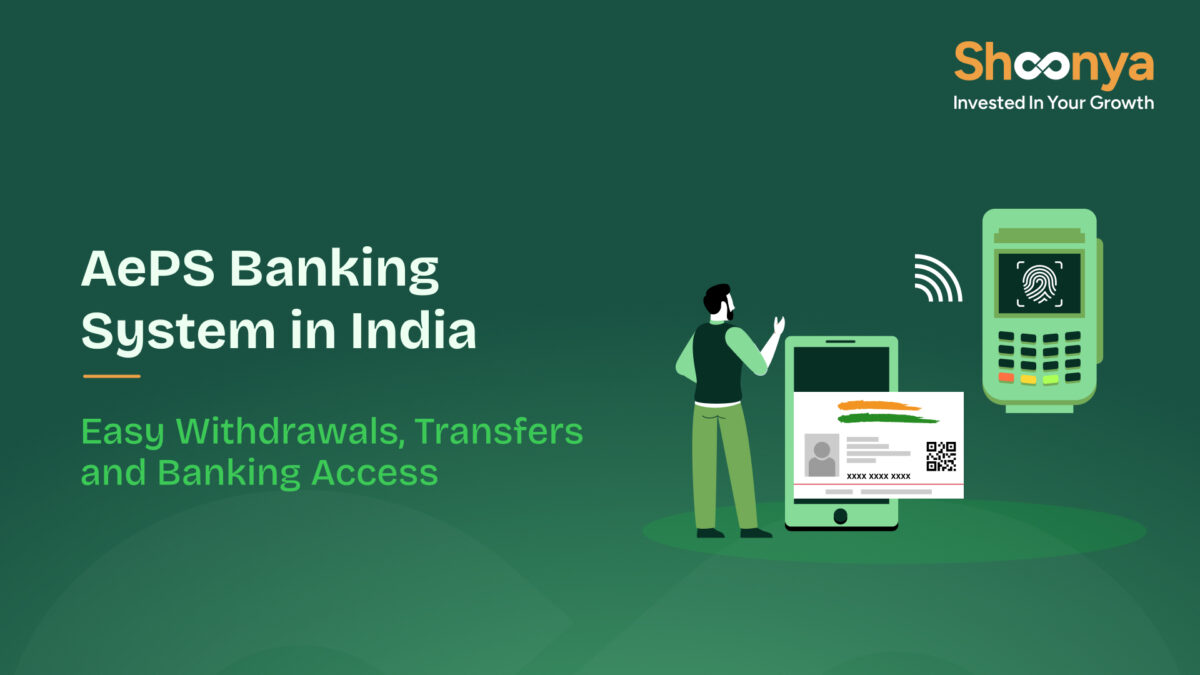
Millions of people in India still rely on local banking agents for basic services such as cash withdrawals, balance enquiries, and fund transfers. AePS helps make these services accessible through Aadhaar-based verification.
With AePS projected to process over 3.5 billion transactions annually, it continues to play an important role in expanding banking access across rural and semi-urban areas.
This makes AePS especially useful for people who may not use debit cards, PINs, or mobile banking regularly. In this blog, you will learn what AePS is, how it works, its benefits, transaction limits, and safety points to remember.
What Is AePS?
The full form of AePS is Aadhaar Enabled Payment System.
It is a banking service that allows customers to use their Aadhaar number and biometric authentication for basic financial transactions.
With AePS, a customer can visit a banking correspondent or a micro-ATM point and access services such as cash withdrawal, balance enquiries, and fund transfers without using a debit card or PIN.
What Are the Features of AePS?
AePS is designed to make basic banking more accessible through Aadhaar and biometric verification.
Here are the key features of AePS:
- Aadhaar-based access: Transactions are linked to the customer’s Aadhaar-seeded bank account.
- Biometric authentication: Fingerprint or iris verification is used to confirm identity.
- No card or PIN required: Users do not need a debit card or ATM PIN for AePS transactions.
- Micro-ATM support: Transactions are usually carried out through banking correspondents or micro-ATMs.
- Basic banking access: Users can withdraw cash, check their balance, and perform other supported transactions.
How Does AePS Work?
AePS confirms the customer’s identity using Aadhaar and biometrics, then completes the selected banking transaction.
Here is the basic process:
- The customer visits an AePS-enabled banking agent.
- The customer provides their Aadhaar number.
- The bank linked with Aadhaar is selected.
- The customer chooses the transaction type.
- Biometric verification is done using fingerprint or iris authentication.
- Once verified, the transaction is processed.
What Services Does AePS Offer?
AePS allows essential banking services, including cash withdrawals, mini-statements, and Aadhaar-to-Aadhaar fund transfers, using biometric authentication.
Here are the key services of AePS:
- Cash withdrawal: Withdraw money from an Aadhaar-linked bank account using biometric verification.
- Balance enquiry: Check the available balance in the linked bank account.
- Mini statement: View recent transaction details.
- Aadhaar-to-Aadhaar fund transfer: Transfer money between Aadhaar-linked bank accounts.
- Cash deposit: Deposit cash at authorised AePS agent locations, if supported.
- Aadhaar Pay: Make Aadhaar-based cashless payments at merchant points.
- Micro-ATM services: Access basic banking transactions through banking correspondents using micro-ATM devices.
What Are the Requirements to Use AePS?
To use AePS, your bank account must be linked with Aadhaar. The transaction is completed through biometric authentication at an AePS-enabled point.
You generally need:
- Aadhaar number
- Bank account linked with Aadhaar
- Fingerprint or iris authentication
- AePS-enabled bank
- Banking correspondent, AePS agent, or micro-ATM access
You do not need a debit card, ATM PIN, cheque book, or smartphone to complete basic AePS transactions.
How to Use AePS for Cash Withdrawal?
You can withdraw cash through AePS by visiting an AePS-enabled banking correspondent or micro-ATM point.
Here is the basic process:
- Visit a nearby AePS agent or banking correspondent.
- Share your Aadhaar number.
- Select the bank linked with your Aadhaar.
- Choose cash withdrawal.
- Enter the withdrawal amount.
- Authenticate using fingerprint or iris verification.
- Collect the cash and transaction receipt.
Always check the transaction SMS or receipt before leaving the agent location.
What Is the AePS Transaction Limit?
The AePS transaction limit may vary depending on the bank, transaction type, and service provider. However, the standard cash withdrawal limit is:
| AePS Limit Type | Common Limit |
| Per-transaction maximum | ₹10,000 |
| Daily cumulative limit | Generally ₹50,000, may vary by bank |
| Number of transactions | Typically 5–10 per day |
| Aadhaar Pay limit | Often up to ₹50,000 per day for merchant payments |
Note: AEPS transaction limits may vary by bank, transaction type, service provider, and applicable NPCI or bank guidelines. Always check with your bank or AEPS service provider before making a transaction.
What Are the Benefits of AePS?
AePS helps make banking easier for users who may not have regular access to bank branches, ATMs, or digital banking apps.
Here are the key benefits of AePS:
- Easy cash access: Users can withdraw money through nearby banking agents.
- Useful in rural areas: It supports banking access in places with fewer branches or ATMs.
- Simple authentication: Aadhaar and biometrics are enough to complete transactions.
- No need to remember PINs: Users do not have to rely on ATM PINs or debit cards for basic transactions.
- Supports financial inclusion: AePS helps more people access basic banking services.
Is AePS Safe?
AePS is safe because it uses Aadhaar-based biometric authentication, which means transactions are approved through fingerprint or iris verification instead of a debit card or PIN. However, users should still be careful while transacting.
Safety checks to remember:
- Do not share Aadhaar details unnecessarily.
- Verify the agent or banking correspondent before transacting.
- Check the amount entered before biometric authentication.
- Keep the transaction receipt or reference number.
- Report failed or suspicious transactions to your bank immediately.
Before using Aadhaar-based banking services like AePS, make sure your PAN and Aadhaar are properly linked to avoid KYC or banking issues. Learn How to Link PAN With Aadhaar Online.
What Is the Difference Between AePS and UPI?
AePS enables users to access banking services using Aadhaar, while UPI enables instant digital payments through mobile apps.
Here are the points of difference between AePS and UPI:
| Point | AePS | UPI |
| Authentication | Aadhaar and biometric verification | UPI PIN |
| Main use | Cash withdrawal, balance enquiry, Aadhaar-based transactions | Instant transfers, bill payments, merchant payments |
| User device needed | Not always required | Smartphone usually required |
| Debit card/PIN needed | No debit card or ATM PIN needed | UPI PIN required |
| Common access point | Banking correspondent or micro-ATM | UPI apps like GPay, PhonePe, Paytm, BHIM |
What Is the Difference Between AePS and ATM?
AePS is useful when a customer does not have a debit card or easy ATM access, while ATMs are useful for card-based self-service banking.
Here are the points of difference between AePS and ATM:
| Point | AePS | ATM |
| Access method | Aadhaar number and biometric authentication | Debit card and PIN |
| Location | Banking correspondent or micro-ATM point | ATM machine |
| Card needed | No | Yes |
| PIN needed | No ATM PIN needed | ATM PIN required |
| Useful for | Aadhaar-linked basic banking services | Cash withdrawal and ATM-based services |
Confused about UPI IDs? Learn what a VPA is, how it works, and how it helps you send and receive money securely through UPI.
What Are the Common Issues in AePS Transactions?
AePS transactions can fail due to technical, bank-related, or authentication issues.
Here are the common AePS issues:
- Biometric mismatch: Fingerprint or iris verification fails.
- Aadhaar not linked: The bank account is not properly linked with Aadhaar.
- Bank server issue: The transaction fails due to downtime or network problems.
- Wrong bank selection: The incorrect Aadhaar-linked bank is selected.
- Transaction timeout: The request is not completed within the expected time.
- Amount debited but cash not received: The account is debited, but the agent fails or delays dispensing cash.
What Should You Do If an AePS Transaction Fails?
If an AePS transaction fails, first check whether money has been debited from your bank account. Sometimes failed transactions are automatically reversed, but it is important to keep proof.
Here is what you should do:
- Check the SMS alert or bank statement.
- Ask the banking correspondent for the transaction receipt.
- Note the transaction reference number.
- Wait for the bank-provided reversal timeline, if applicable.
- Contact your bank if the amount is debited but not reversed.
- Raise a complaint with the bank or AePS service provider if needed.
Final Thoughts
AePS makes basic banking easier for people who may not have regular access to bank branches, ATMs, debit cards, or mobile banking apps. At the same time, users should stay careful. Always transact through trusted agents, verify the amount before biometric authentication, and keep the receipt or SMS confirmation for every transaction.
As digital banking becomes more accessible, take the next step toward investing by opening a free Demat account and exploring different investment options.
Aadhaar Enabled Payment System (AePS): FAQs
To withdraw money through AePS, visit an AePS-enabled banking correspondent or micro-ATM point. Provide your Aadhaar number, select your bank, choose cash withdrawal, enter the amount, and complete biometric verification using your fingerprint or iris.
The AePS monthly limit may vary from bank to bank. Some banks set daily, monthly, and transaction-count limits, so it is best to check with your bank or AePS service provider for the latest limit.
No, UPI and AePS are different. UPI uses a mobile app and UPI PIN for instant digital payments, while AePS uses Aadhaar and biometric verification for basic banking services through agents or micro-ATMs.
AePS is available only through banks that are enabled for Aadhaar-based transactions. Your bank account must also be linked with Aadhaar to use AePS services.
AePS is used for basic banking services, such as cash withdrawals, balance enquiries, and fund transfers. Aadhaar Pay is primarily used for merchant payments, where customers pay using Aadhaar and biometric authentication.
AePS risks include biometric misuse, fraud by unauthorised agents, incorrect transaction amounts, failed transactions, and delayed reversals. Always use trusted agents, verify the amount before authentication, and keep the receipt or SMS confirmation.
Source: https://aepsindia.com/
Disclaimer: This content is for education and awareness purposes only and should not be considered investment advice or a recommendation. Investments in securities markets are subject to market risks. Read all the related documents carefully before investing.


Explore Our Offerings

Stocks
Trade equities across NSE and BSE with zero delivery charges. Invest, hold or sell with a seamless experience.


Future & Options
Execute complex strategies with simple tools and real-time data.

IPOs
Apply to the latest IPOs in just a few taps. Stay updated and capture opportunities as they open.